

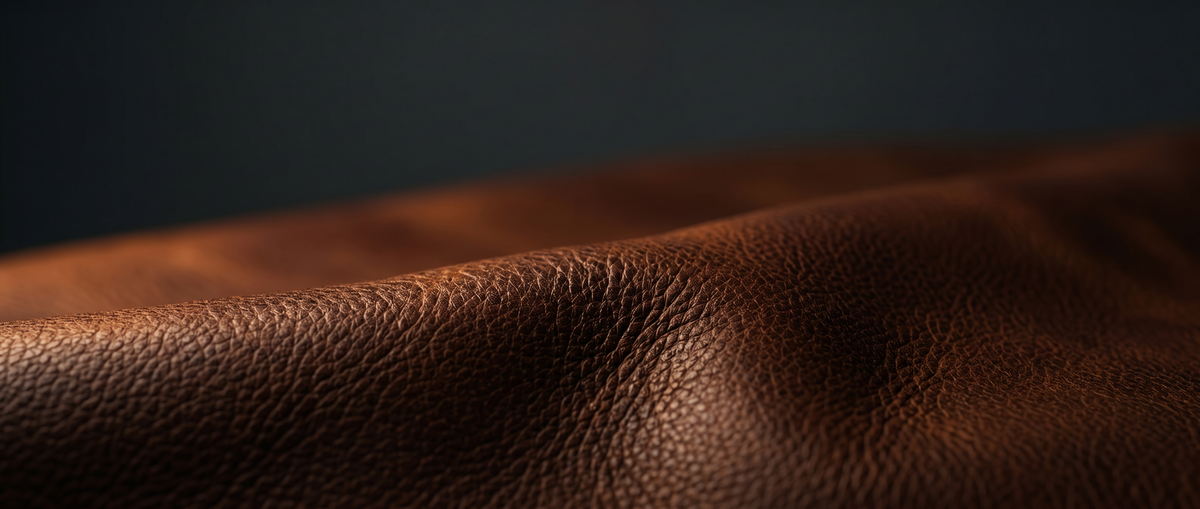
Why Does Leather Smell — and What Should Real Leather Smell Like?
Quick answer: Real leather has a warm, earthy, slightly sweet smell that comes from the natural hide, the tanning process and the oils used to finish it. Fake (PU or PVC) leather smells faintly of plastic or chemicals. A clean, organic smell is one of the simplest signs that leather is genuine; a strong chemical or fishy smell suggests a synthetic or a poorly tanned hide.
What causes the natural leather smell
The smell of genuine leather is a combination of three things:
-
The hide itself — the natural proteins and fibres of the animal skin.
-
The tanning process — vegetable-tanned leather, tanned with plant tannins from bark and leaves, has a richer, earthier, almost woody scent; chrome-tanned leather has a fainter, cleaner smell when new.
-
The finishing oils and waxes (fatliquors) worked into the leather to keep it supple, which add warmth and depth to the scent.
That distinctive "new leather" smell is strongest when a bag is new and gently fades over the first months of use as the surface oils settle — it doesn't mean anything is wrong; it's the leather maturing.
Smell as a real-vs-fake test
Scent is one of the quickest, cheapest authenticity checks there is:
|
Smell |
Likely meaning |
|---|---|
|
Warm, earthy, slightly sweet or woody |
Genuine leather (often vegetable-tanned) |
|
Faint, clean, mild |
Genuine chrome-tanned leather |
|
Plastic, chemical, "new car" vinyl |
Synthetic / PU or PVC "leather" |
|
Strong chemical or solvent smell |
Cheaply or poorly tanned leather |
|
Fishy or ammonia-like |
A finishing or tanning problem — a red flag |
Combine the smell test with look and feel (natural grain variation, a warm rather than cold surface, no perfectly uniform pattern) for a reliable read on whether leather is genuine.
Why a bag might smell bad — and how to fix it
A good leather smell is pleasant; a bad one usually has a specific, fixable cause:
|
Problem smell |
Cause |
Fix |
|---|---|---|
|
Musty / mouldy |
Stored damp or in plastic; humidity |
Air it out; wipe with a barely-damp cloth; dry fully; store with airflow and silica gel |
|
Strong chemical |
Residue from tanning/finishing |
Air in a ventilated space for days to weeks; it usually fades |
|
Trapped / stale |
Sealed storage, no airflow |
Leave open in fresh air; place baking soda nearby (not directly on leather) |
|
Smoke / food odours |
Absorbed from environment |
Air out; baking soda nearby; time |
General approach: ventilation and time fix most leather odours. Place an open container of baking soda near the bag (not poured inside or onto the leather) to absorb smells, keep it in fresh, dry air, and avoid sealing it up. Don't use perfume or air freshener directly on leather, and don't soak it.
How long does the smell last?
The pleasant new-leather smell mellows over weeks to a few months of normal use. An unpleasant chemical smell on a new item should also fade with airing within that window — if a strong chemical or fishy smell persists, that's a sign of a quality problem rather than normal break-in.
Frequently asked questions
-
What should real leather smell like? Real leather smells warm, earthy and slightly sweet or woody. Vegetable-tanned leather has a richer scent; chrome-tanned leather is fainter and cleaner. It should never smell strongly of plastic or chemicals.
-
Why does my leather bag smell bad? The most common cause is being stored damp or sealed in plastic, which creates a musty, mouldy smell. Airing it out, wiping it, drying it fully and storing it with airflow usually fixes it.
-
Does fake leather smell different from real leather? Yes. Synthetic (PU or PVC) leather has a plastic or chemical smell, while genuine leather smells organic and earthy. Smell is a quick way to help tell them apart.
- How do I get a smell out of a leather bag? Air it out in a dry, ventilated space, place baking soda nearby to absorb odours, and give it time. Avoid sealing it up, soaking it, or spraying perfume directly onto the leather.


%20leather%20smells%20faintly%20of%20...)